
Roof Repair vs Replacement in San Diego: How to Decide

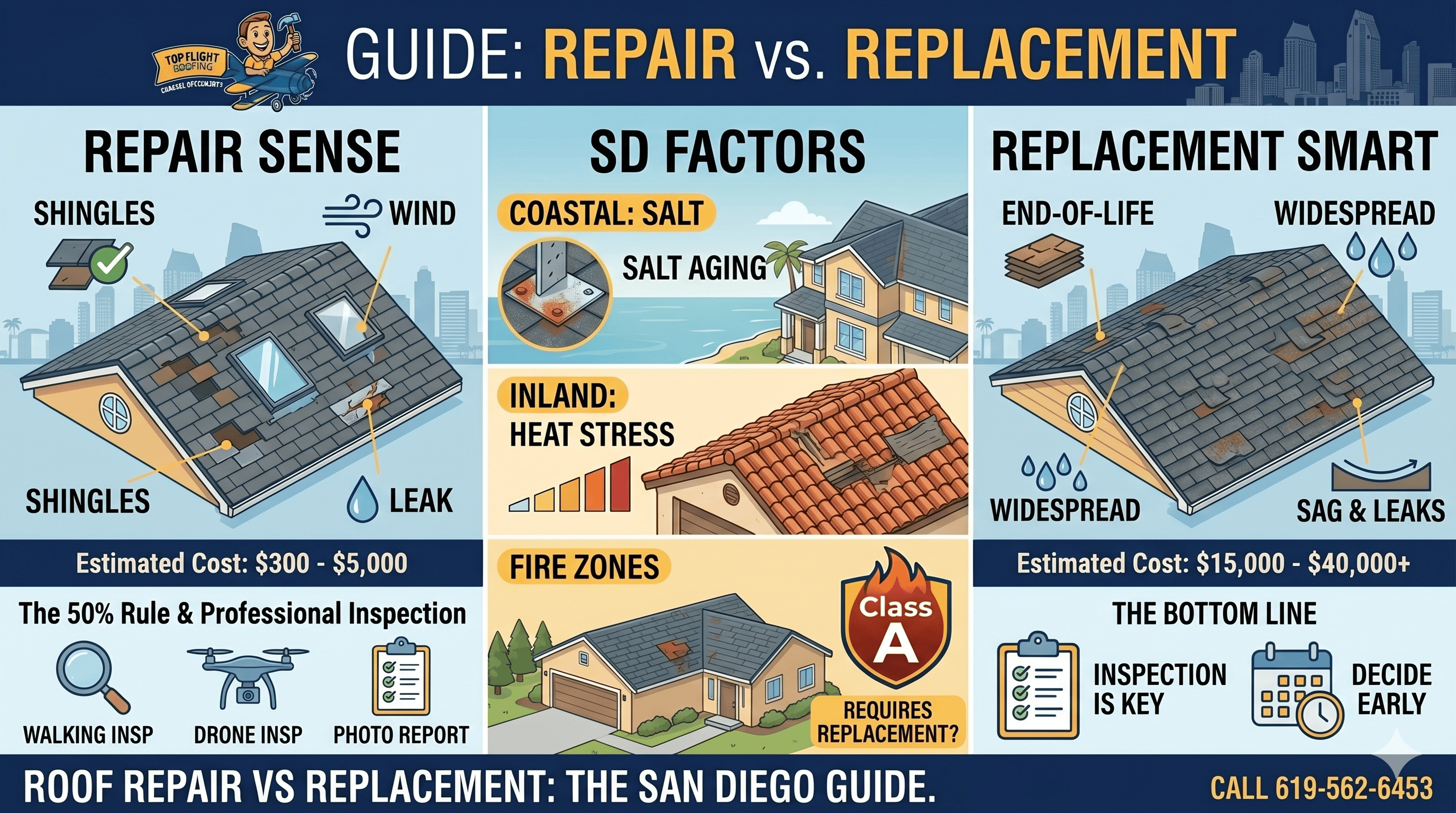
The question every San Diego homeowner asks when a leak shows up or the shingles start looking rough: do I need a roof repair, or is it time for a full roof replacement? The answer matters because the cost difference is significant. A targeted repair might run a few hundred to a few thousand dollars. A full replacement can run $15,000 to $40,000 or more, depending on size and material.
Getting this decision right comes down to understanding the actual condition of your roof, the age of the materials, and what's driving the problem in the first place. Here's how we walk San Diego homeowners through it.
When a Roof Repair Makes Sense
Roof repairs are the right call when the damage is localized, and the rest of the roof is in good shape. We're talking about issues like a few missing or damaged shingles after a Santa Ana wind event, a leak around a single skylight or vent, minor flashing damage, or a small section affected by tree debris. If 80% or more of your roof is still in good condition and you have at least 5-7 years of useful life left in the system, repair is almost always the better financial decision.
A few specific scenarios where repair is clearly the right path:
- Your roof is under 12-15 years old and shows isolated damage
- A storm damaged a specific area but the rest of the roof looks fine
- You have a small active leak you can trace to a single source
- One or two flashing details have failed but the field of the roof is solid
- You're selling the home soon and need to address inspection findings
When Replacement Is the Smarter Move
Roof replacement makes sense when the damage is widespread, the roof has reached the end of its useful life, or you're dealing with recurring problems that repairs keep failing to solve. The biggest mistake we see San Diego homeowners make is throwing repair money at a roof that's actually due for replacement.
Signs your roof needs full replacement instead of more repairs:
- Your roof is 20+ years old (asphalt) or has aging underlayment (tile)
- You see widespread granule loss, curling, or cracking
- Multiple leaks have appeared in different areas of the home
- The deck underneath shows sagging or visible damage
- Past repairs have failed or required follow-up work
- You're seeing daylight through the roof from inside the attic
The San Diego Factors That Change the Math
Roof lifespan in San Diego varies significantly by location and exposure. A coastal roof in Pacific Beach or La Jolla ages faster than an inland roof in Poway or Escondido due to salt air, but inland roofs face their own issue with sustained heat. A few specific factors that affect the repair vs replace decision in our area:
Coastal Exposure
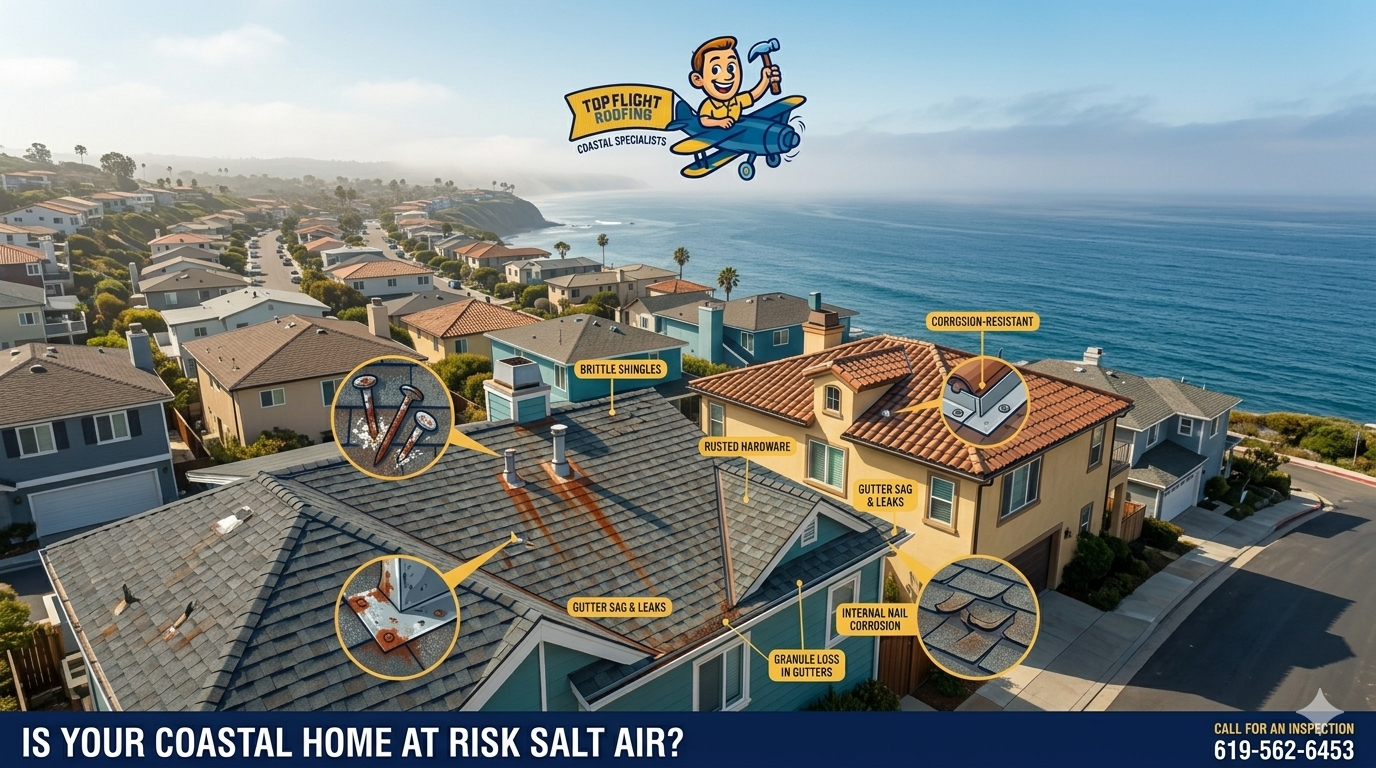
Salt air corrodes fasteners, flashing, and shingle binders faster than inland environments. If you live within a mile of the coast and your roof wasn't installed with marine-grade materials, the lifespan is shorter than the manufacturer's nominal rating. We often see coastal roofs needing replacement at 15-18 years, which would have lasted 25 years inland.
Inland Heat
East County areas like Santee, El Cajon, and Lakeside see sustained heat that dries out asphalt shingles, makes flashing brittle, and stresses underlayments from below. Roofs here typically lose useful life faster than coastal areas in different ways: not from corrosion, but from thermal aging.
Fire Severity Zones
Many San Diego County neighborhoods sit in high fire severity zones, including Poway, Rancho Bernardo, Scripps Ranch, Ramona, and large parts of North County. If your roof doesn't meet current Class A fire-rated requirements, replacement may be necessary even if the materials are otherwise functional.
What a Professional Inspection Reveals
Most of what determines the repair vs replace decision can't be seen from the ground. A proper inspection includes walking the roof, checking flashing integrity around every penetration, evaluating the underlayment condition where visible, looking at the deck from the attic side, and assessing the field of shingles or tiles for granule loss and aging.
The inspection should produce a written report with photos showing the actual condition of the roof. If a contractor tells you over the phone that you need a full replacement without inspecting the roof, get a second opinion. Same goes if they tell you a roof is fine when you have an active leak.
How Long Does Each Option Take?
Most targeted repairs in San Diego County take a single day, sometimes just a few hours. Larger repairs involving multiple areas or significant flashing work may take 2-3 days. Full roof replacements typically take 3-5 days for an average single-family home, longer for larger or more complex roofs. Tile lift-and-relay projects (where the tile is saved and the underlayment replaced) can run 5-7 days.
The Bottom Line
Repair vs replacement isn't always a clear binary. Sometimes the right answer is repair now and plan for replacement in 2-3 years. Sometimes it's replacement now even though the roof could technically be patched. The right answer depends on the actual condition of your roof, your timeline for staying in the home, and the realistic cost of repeated repairs versus a single replacement investment.
If you're not sure which path makes sense for your San Diego home, the first step is always a thorough professional inspection. From there, the decision becomes much clearer.
Frequently Asked Questions: Roof Repair Vs Replacement
Can I just patch one section of my roof?
Yes, if the damage is truly isolated and the rest of the roof is in good condition. The challenge is that what looks like one bad section often hides issues elsewhere. A thorough inspection determines whether patching is the right approach or just a temporary fix.
How do I know if my roof is at end-of-life?
Common signs include widespread granule loss (you'll see granules in your gutters), curling or cracking shingles, sagging in any area, multiple leaks over time, and roofs that simply look "tired" from the street. If your roof is 20+ years old and showing any of these signs, replacement is likely the right call.
Will a new roof actually increase my home value?
Possibly, a new roof typically adds significant value to a San Diego home, both in actual sale price and in how quickly the home sells. Many buyers won't even consider homes with obviously aging roofs because of the immediate replacement cost they'd face.
How quickly do I need to decide?
If you have an active leak, the answer is immediately. If you're seeing aging but no leaks, you have time to plan but shouldn't wait until winter rains arrive. The best time to replace a roof in San Diego is late spring through early fall, when the weather is most predictable.

More Articles

Roof Repair vs Replacement: Which Saves You More Money?
Roof Repair vs Replacement in San Diego: How to Decide
The Impact of Salt Air on Coastal Roofs in San Diego

Phone Number:
619-562-6453Address: 9510 Cuyamaca St STE 101, Santee CA 92071