
The Impact of Salt Air on Coastal Roofs in San Diego

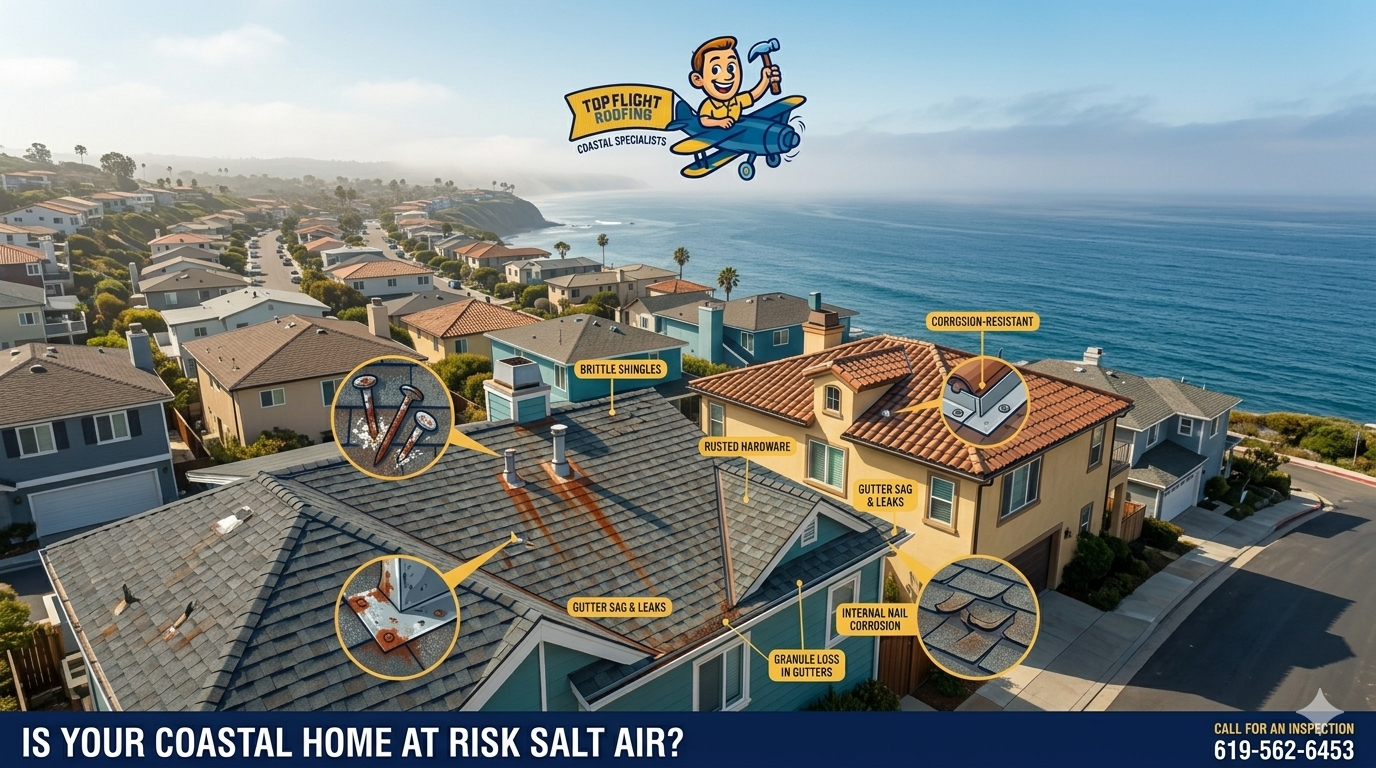
Living a few miles from the ocean comes with a cost most people never think about. That clean, salty breeze rolling in off the Pacific is slowly eating your roof.
Homes in La Jolla, Point Loma, Ocean Beach, Coronado, and up the coast through Carlsbad and Encinitas all deal with it. Salt air is one of the harshest things a roof can face, and it works quietly for years before you notice.
Why Coastal Roofs Wear Out Faster
Marine air carries tiny salt particles. They settle on every surface of your roof and stay there. When the morning marine layer rolls in, that moisture mixes with the salt and creates a mild corrosive film.
Inland, a roof mostly battles sun and heat. On the coast it fights sun, heat, and a constant salty dampness that speeds up corrosion and breakdown. A roof that might last 25 years in El Cajon can show its age years earlier in Pacific Beach.
What Salt Air Actually Attacks On Your Roof
The roof damage from the salt air starts with metal, and roofs have more metal than people realize.
Fasteners and nails. The nails holding your shingles down corrode from the inside out. As they weaken, shingles loosen and start lifting in the wind.
Flashing. The metal around chimneys, vents, and valleys is your roof's main defense against leaks. Salt corrosion pits and thins it, and once flashing fails, water finds its way in.
Vents and fixtures. Metal vents, caps, and exposed hardware rust and degrade, opening up new entry points for water.
Gutters and downspouts. Corroded gutters sag, leak, and stop moving water away from the house, which creates a second set of problems at the roofline and foundation.
Salt also breaks down asphalt shingles over time, drying them out and making them brittle faster than they would age inland.
Warning Signs To Watch For
You don't need to climb up on top of your roof to spot trouble. From the ground or a window, look for:
- Rust streaks running down from vents, flashing, or fasteners
- Shingles that look curled, cracked, or lifted at the edges
- Granules from asphalt shingles collecting in your gutters
- Gutters pulling away from the house or showing rust
- Any staining on interior ceilings near exterior walls
Coastal homeowners should get a professional roofer look at and inspect the roof once a year. Problems caught early are less expensive. Problems caught after a leak are not.
Roofing Materials That Hold Up Near The Ocean
If you live close to the water and you're replacing a roof, material choice matters more than it would inland.
Corrosion-resistant roofing options pay off here. If you want metal roofing, aluminum and certain coated steels handle salt far better than standard galvanized metal. For shingles, higher-grade architectural asphalt and tile both perform well, and clay or concrete tile in particular shrugs off salt while suiting the Southern California style.
Whatever the roofing surface, the fasteners and flashing underneath should be stainless steel or another corrosion-resistant grade. Cheap fasteners on a good roof are a false savings near the coast.
Keeping A Coastal Roof Healthy
A little roof maintenance goes a long way against salt air.
Rinsing the roof and gutters with fresh water during dry stretches helps wash off built-up salt, especially after a windy period that drives more sea spray inland. Keep your gutters clear so water drains properly. And stay on top of small repairs, because salt turns a minor issue into a real problem faster than most homeowners expect.
Top Flight Roofing works on coastal homes throughout San Diego County and knows what the ocean does to a roof. For a coastal roof inspection or honest advice on materials, call 619-562-6453 or get an instant free quote.
Frequently Asked Questions: Roof Repair Vs Replacement
Can I just patch one section of my roof?
Yes, if the damage is truly isolated and the rest of the roof is in good condition. The challenge is that what looks like one bad section often hides issues elsewhere. A thorough inspection determines whether patching is the right approach or just a temporary fix.
How do I know if my roof is at end-of-life?
Common signs include widespread granule loss (you'll see granules in your gutters), curling or cracking shingles, sagging in any area, multiple leaks over time, and roofs that simply look "tired" from the street. If your roof is 20+ years old and showing any of these signs, replacement is likely the right call.
Will a new roof actually increase my home value?
Possibly, a new roof typically adds significant value to a San Diego home, both in actual sale price and in how quickly the home sells. Many buyers won't even consider homes with obviously aging roofs because of the immediate replacement cost they'd face.
How quickly do I need to decide?
If you have an active leak, the answer is immediately. If you're seeing aging but no leaks, you have time to plan but shouldn't wait until winter rains arrive. The best time to replace a roof in San Diego is late spring through early fall, when the weather is most predictable.

More Articles

Roof Repair vs Replacement: Which Saves You More Money?
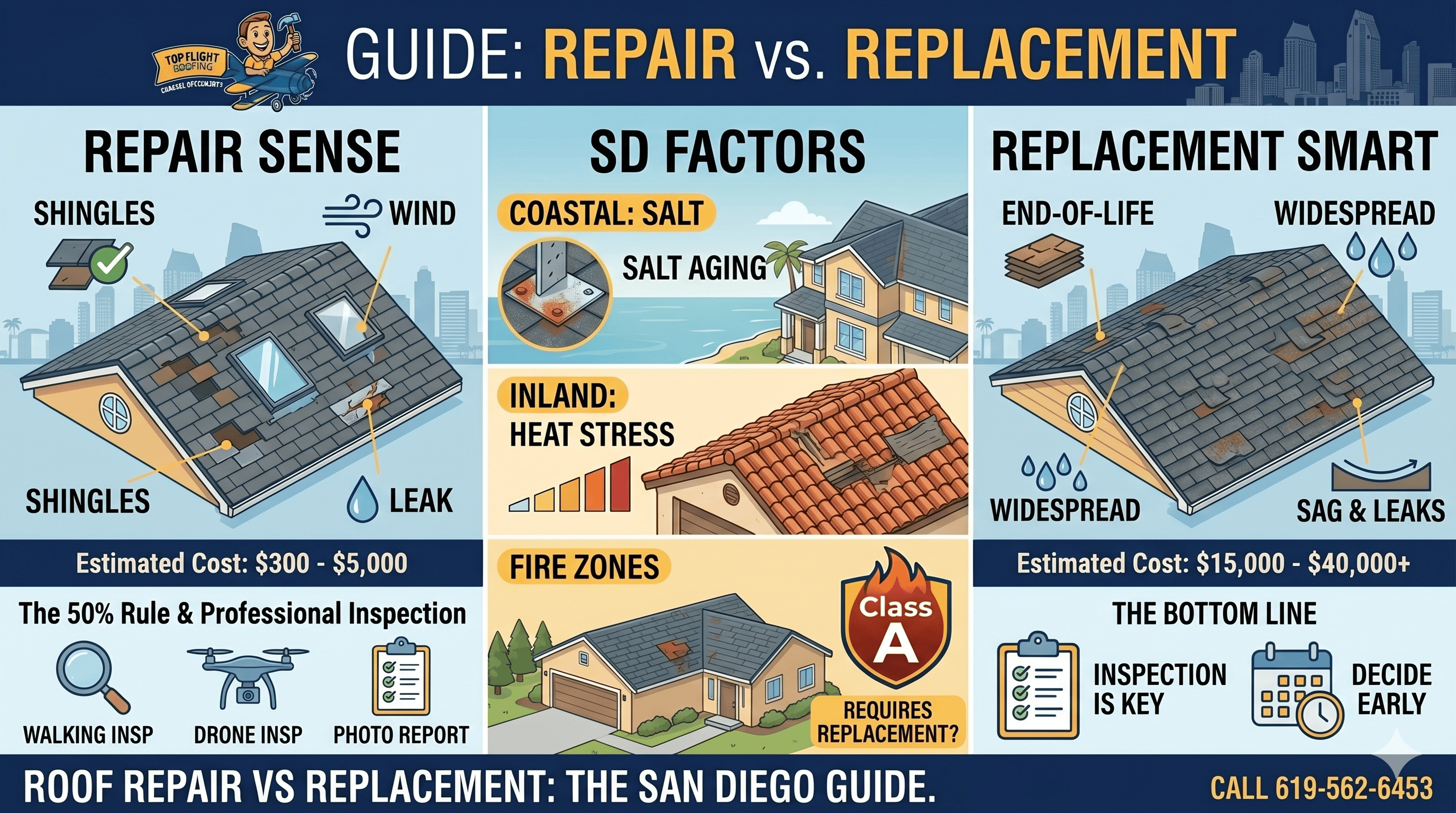
Roof Repair vs Replacement in San Diego: How to Decide
The Impact of Salt Air on Coastal Roofs in San Diego

Phone Number:
619-562-6453Address: 9510 Cuyamaca St STE 101, Santee CA 92071