
Emergency Roof Repair in San Diego: What to Do After a Storm


Most San Diego homeowners go years without thinking about their roof. The weather is usually mild and forgiving. Then a storm parks over the county, drops a couple inches of rain in an afternoon, and a brown ring shows up on the living room ceiling.
If that's happening right now, here's what to do.
First, Stay Off The Roof
A wet roof is a slip and fall waiting to happen, and the damage causing the leak is rarely visible from the top, anyway. There is nothing useful you can do up there during or right after a storm. Handle the leak problem from inside until a roofing professional can inspect it safely.
Contain The Water Inside The House
Move furniture, electronics, and anything valuable out from under the leak. Put a bucket or trash can under the drip. Lay towels around it to catch and water that may splash up and on to the floor.
If you see the ceiling bulging or sagging, that's water pooling above the drywall. Carefully poke a small hole in the center with a screwdriver and let it drain into your bucket. We know that it feels wrong to put a hole in your own ceiling, but it is the right call at this moment. A controlled drain is better than a section of drywall collapsing all at once all over your home.
Document Everything Before You Clean Up
Insurance claims live and die on documentation. Before you mop anything, take photos and videos of the water in your home.
Get wide shots of the room and close-ups of the damage from the leak. Capture the water stain, any soaked insulation, ruined belongings, and the path the water took. Write down the date and time that the leak started. Save it all in one folder on your phone or computer where it can be safe.
If you can see the roof from the ground or from a window, photograph that too. Take photos of any missing shingles, lifted edges, or a downed branch on the roofline. REMEMBER - Do not climb up for the shot.
Get A Temporary Cover In Place
A roof leak that keeps running will damage framing, insulation, and drywall fast. Slowing the water down is the goal until repairs can happen.
For most homeowners, the safe move is to call a professional roofer, like Top Flight Roofing, who offers emergency tarping. They'll secure a tarp over the damaged area to keep water out until a permanent fix is scheduled. If you have a flat or low-slope roof and a dry stretch of weather, some people manage a tarp themselves, but the roof has to be fully dry and you need someone spotting you. When in doubt, leave it to a crew with the gear.
Call For Emergency Repair When You See These Signs
Not every roof leak is an emergency. Some can wait a day or two for a normal roof inspection appointment. Call right away if you notice:
- Water actively running into the house during or after the storm
- A sagging or bulging ceiling
- A large branch or debris resting on the roof
- Visible holes or a section of roof that's clearly come apart
- Multiple leaks in different rooms
Those point to structural damage that gets worse and more expensive the longer it sits.
A Few Words On Insurance
San Diego storm damage is often covered by home owners insurance, but coverage depends on your policy and the cause. Sudden storm damage usually qualifies. Damage from long-term neglect usually does not, which is one more reason for you to document the storm clearly.
Call your insurer to start a claim while the event is fresh. A reputable roofer can meet the adjuster, point out storm-related damage, and give an honest estimate. Be wary of anyone who shows up uninvited promising a "free roof" through insurance. That pitch is a common scam after bad weather.
After The Emergency
Once the water has stopped and the claim is moving, get a full roof inspection. A storm that caused one visible leak often loosens flashing, cracks sealant, or lifts shingles in spots you can't see from the ground. Catching these roofing issues now keeps the next storm from turning into a bigger repair.
Top Flight Roofing handles emergency roof repair across San Diego County. If a storm left you with a leak, call 619-562-6453 for quick help or to schedule a roof inspection.
Frequently Asked Questions: Roof Repair Vs Replacement
Can I just patch one section of my roof?
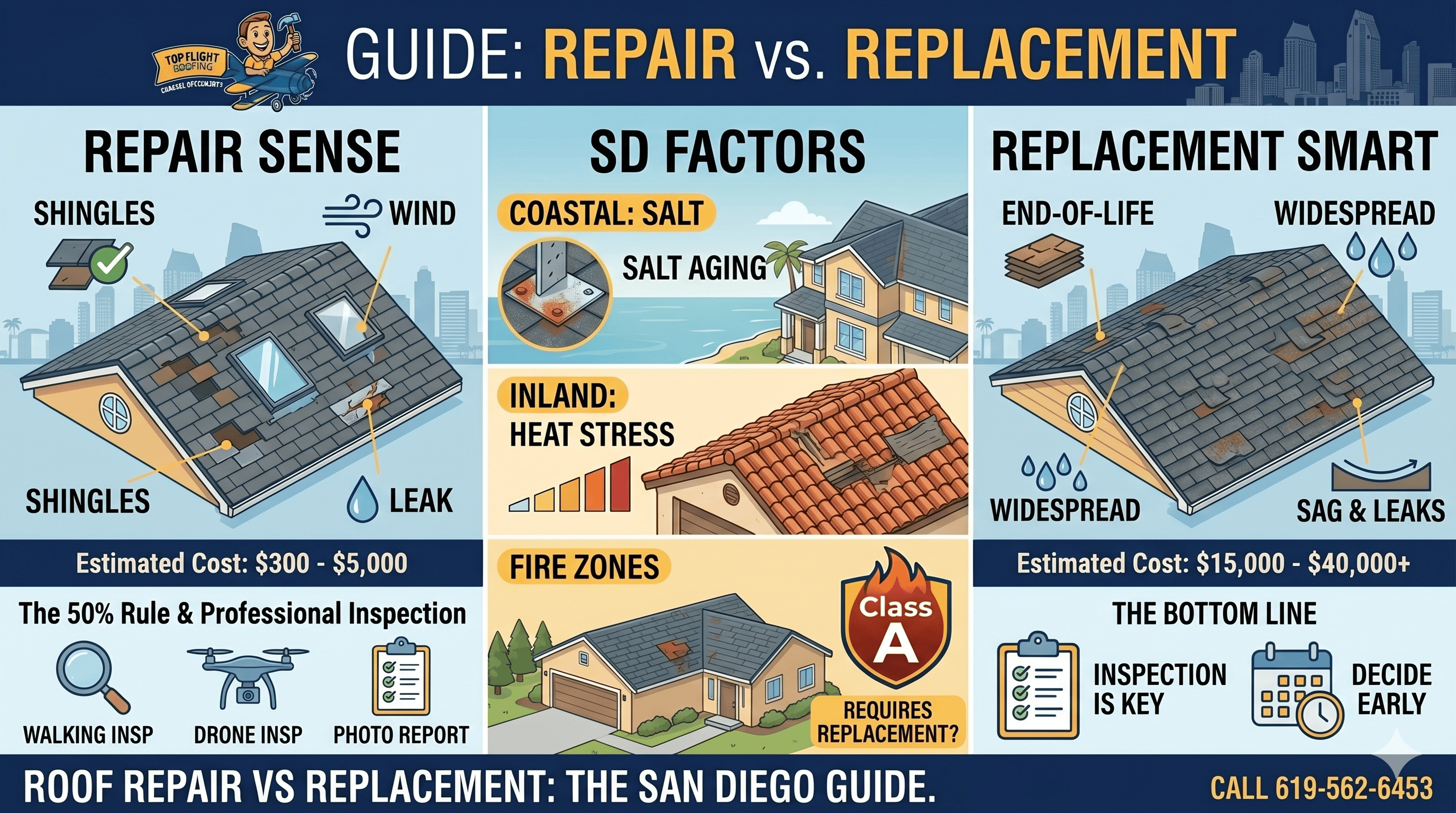
Yes, if the damage is truly isolated and the rest of the roof is in good condition. The challenge is that what looks like one bad section often hides issues elsewhere. A thorough inspection determines whether patching is the right approach or just a temporary fix.
How do I know if my roof is at end-of-life?
Common signs include widespread granule loss (you'll see granules in your gutters), curling or cracking shingles, sagging in any area, multiple leaks over time, and roofs that simply look "tired" from the street. If your roof is 20+ years old and showing any of these signs, replacement is likely the right call.
Will a new roof actually increase my home value?
Possibly, a new roof typically adds significant value to a San Diego home, both in actual sale price and in how quickly the home sells. Many buyers won't even consider homes with obviously aging roofs because of the immediate replacement cost they'd face.
How quickly do I need to decide?
If you have an active leak, the answer is immediately. If you're seeing aging but no leaks, you have time to plan but shouldn't wait until winter rains arrive. The best time to replace a roof in San Diego is late spring through early fall, when the weather is most predictable.

More Articles

Roof Repair vs Replacement: Which Saves You More Money?
Roof Repair vs Replacement in San Diego: How to Decide
The Impact of Salt Air on Coastal Roofs in San Diego

Phone Number:
619-562-6453Address: 9510 Cuyamaca St STE 101, Santee CA 92071