
How to Get Your San Diego Roof Ready for Rain Season

San Diego gets most of its rain between November and March. After months of dry heat and Santa Ana winds, the first real storm of the season is when most roof problems show up. A little preparation in the fall can save you from a ceiling stain, or worse, in January.
Here is a simple checklist to get your roof ready before the rain.
Your Pre-Rain Roof Checklist
- Clean the gutters and downspouts. Leaves and debris that built up over the summer block the water and push it back under the roof edge. Make sure downspouts drain away from the house.
- Look for cracked, slipped or missing tiles and shingles. Do it from the ground with binoculars, not by climbing on the roof. Pay attention to edges, ridges and anywhere a branch has been rubbing.
- Check the flashing. Chimneys, skylights, vents and the spots where the roof meets a wall are where most leaks start. Look for gaps, rust or lifted metal.
- Trim overhanging branches. Branches scrape the roof in the wind and drop leaves into gutters and valleys.
- Clear the valleys and flat areas. Debris in roof valleys and on flat roofs traps water and holds it against the roof.
- Look in the attic. On a sunny day, check for daylight coming through, water stains on the wood or damp insulation. These are early warning signs.
- Get a professional inspection. A roofer can spot worn underlayment, failing flashing and other problems you can’t see from the ground.
Why the First Storm Causes the Most Leaks
San Diego roofs spend most of the year in sun and heat. Shingles dry out, flashing sealants crack, and Santa Ana winds can lift tiles and shingles without anyone noticing. Debris piles up in gutters and valleys over the dry months. When the first heavy rain comes, it finds every one of those weak spots at once.
A Note for Tile Roof Owners
Tile roofs are common in San Diego, and they can hide problems. The tiles shed most of the water, but the underlayment beneath them is what actually keeps your home dry. Underlayment typically wears out after 20 to 30 years, even if the tiles still look fine. If your tile roof is that old and has never had the underlayment replaced, have it checked before the rain. Learn more about tile roof repair.
What to Do If Your Roof Leaks During a Storm
- Move furniture, electronics and valuables away from the leak.
- Catch the water with a bucket and towels.
- If the ceiling is bulging with water, it may need to be drained. Keep people away from that area.
- Stay off the roof. Wet roofs are slippery and dangerous.
- Take photos for your records and your insurance.
- Call a roofer. See our emergency roof repair and roof leak repair pages for more.
Frequently Asked Questions
When is rain season in San Diego?
Most of San Diego’s rain falls between November and March, so fall is the best time to get your roof ready.
How often should I have my roof inspected?
Once a year, ideally in late summer or fall before the rainy season, and after any major storm or high winds.
Can a roof be repaired while it’s raining?
A roofer can usually secure the area temporarily to stop the water. The permanent repair is done once the roof is dry.
Book a Free Pre-Season Roof Inspection
Top Flight Roofing has inspected and repaired roofs across San Diego County since 2000. Our roof inspections are free, and we’ll tell you honestly whether your roof is ready for the rain. Call 619-562-6453 or book online.
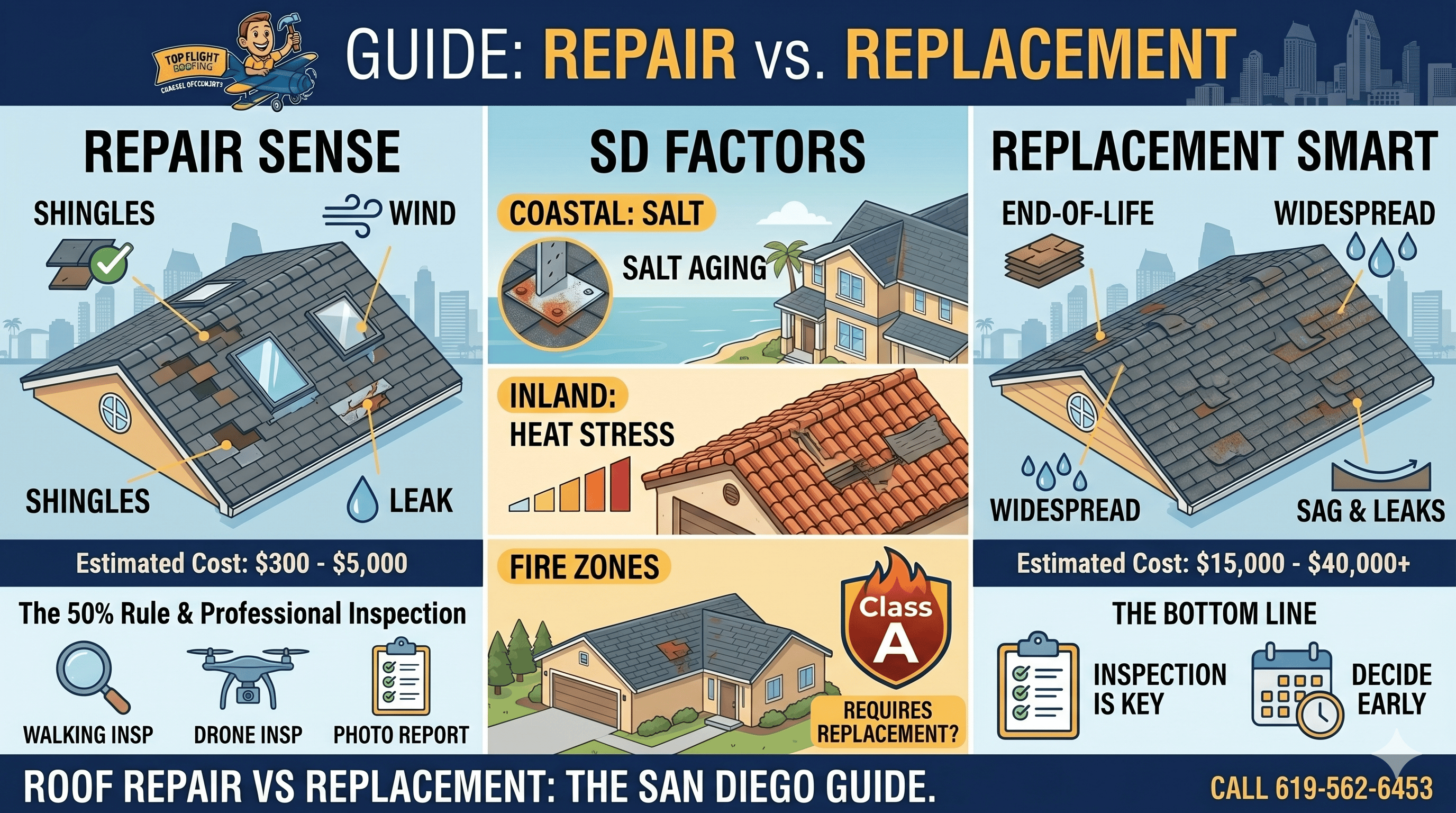
Frequently Asked Questions: Roof Repair Vs Replacement
Can I just patch one section of my roof?
Yes, if the damage is truly isolated and the rest of the roof is in good condition. The challenge is that what looks like one bad section often hides issues elsewhere. A thorough inspection determines whether patching is the right approach or just a temporary fix.
How do I know if my roof is at end-of-life?
Common signs include widespread granule loss (you'll see granules in your gutters), curling or cracking shingles, sagging in any area, multiple leaks over time, and roofs that simply look "tired" from the street. If your roof is 20+ years old and showing any of these signs, replacement is likely the right call.
Will a new roof actually increase my home value?
Possibly, a new roof typically adds significant value to a San Diego home, both in actual sale price and in how quickly the home sells. Many buyers won't even consider homes with obviously aging roofs because of the immediate replacement cost they'd face.
How quickly do I need to decide?
If you have an active leak, the answer is immediately. If you're seeing aging but no leaks, you have time to plan but shouldn't wait until winter rains arrive. The best time to replace a roof in San Diego is late spring through early fall, when the weather is most predictable.

More Articles

Roof Repair vs Replacement: Which Saves You More Money?
Replacing a Roof With Solar Panels in San Diego: What to Know
Tile Roof Underlayment Replacement in San Diego: What to Know

Phone Number:
619-562-6453Address: 9510 Cuyamaca St STE 101, Santee CA 92071