
Roof Inspection Checklist for San Diego Homeowners

Roof inspections aren't all created equal. Some "inspections" are really just sales calls where someone glances at your roof from the driveway and tells you it needs replacement. A real inspection involves climbing the roof, checking every component, evaluating the attic from the inside, and producing a written report with photos and clear findings.
Whether you're hiring an inspector or thinking about checking your own roof, here's what a thorough inspection should cover for a San Diego home.
Why Roof Inspections Matter in San Diego
San Diego's climate creates specific roofing challenges that make regular inspections valuable. Coastal areas face salt corrosion. Inland areas face heat aging. Fire-zone neighborhoods need to maintain Class A material integrity. Most roofing problems develop slowly and become much more expensive to fix once they create leaks or structural damage.
A thorough annual inspection catches issues while they're still small and protects your home from secondary damage.
Exterior Inspection: From the Ground
The inspection should start with a perimeter walk around your home, looking for:
- Visible missing, lifted, or damaged shingles or tiles
- Sagging in any area of the roof line
- Algae, moss, or staining patterns
- Gutter condition and downspout connections
- Fascia and soffit condition (the trim under the roof edge)
- Trees or branches that touch or overhang the roof
- Granules or shingle debris in the yard or gutters
This ground-level assessment frames what to look for once the inspector gets on the roof.
On-Roof Inspection
A real inspection includes walking the roof safely. From up there, the inspector should evaluate:
Field Condition
The main expanse of shingles, tiles, or other roofing material gets checked for general aging, granule loss, curling, cracking, or visible damage. The inspector should look at multiple areas, not just the visible front slope.
Ridges and Hips
Ridge caps and hip caps (where two roof slopes meet) take the most wind and sun exposure. The inspector should check these closely for damage, lifted edges, and proper sealing.
Flashing
Flashing is the metal that seals the roof at vulnerable junctions: around chimneys, skylights, vent pipes, wall intersections, and valleys. This is one of the most common failure points and needs careful inspection. Look for corrosion, lifting, sealant deterioration, or improper installation from past work.
Valleys
Valleys (where two roof slopes meet in a V-shape) channel a lot of water and are particularly prone to leaks. The inspector should look for sealant condition, shingle wear, and any debris that could block water flow.
Penetrations
Every place something passes through the roof (vents, pipes, chimneys, skylights, HVAC equipment, satellite dishes) creates a potential leak point. Each penetration should be checked individually for proper flashing and sealing.
Eaves and Drip Edges
The roof edges should have proper drip edge metal and good shingle overhang. Damage here can cause water to enter the fascia and soffit area.
Attic Inspection: The Hidden Half
An inspection that skips the attic misses half the picture. From inside the attic, the inspector should evaluate:
Deck Condition
The roof deck (plywood or boards under the shingles) should look uniform and solid. Sagging, water staining, soft spots, or visible damage all indicate problems above.
Daylight Visibility
Any daylight visible through the deck from inside the attic means water can get in. This is a serious finding that needs immediate attention.
Insulation
Wet, compressed, or stained insulation indicates past or current leaks. The inspector should note any insulation issues and trace them back to a roof source.
Rafters and Trusses
The structural members supporting the roof should look uniform and undamaged. Water stains, dark spots, or visible damage suggest leaks that need investigation.
Ventilation
The inspector should evaluate whether the attic has adequate intake and exhaust ventilation. Poor ventilation accelerates roof aging from below and creates moisture problems.
San Diego-Specific Inspection Items
A thorough San Diego inspection should also cover items specific to our region:
Fire-Rated Material Compliance
For homes in high fire severity zones (Poway, Rancho Bernardo, Scripps Ranch, Ramona, large parts of North County, and many East County areas), the inspector should verify the roof meets current Class A fire-rated requirements. Older roofs that were code-compliant when installed may not meet current standards.
Ember-Resistant Detailing
Fire-zone homes need ember-resistant venting, sealed eaves, and gutter protection in addition to fire-rated roofing. These details should be checked along with the basic roof condition.
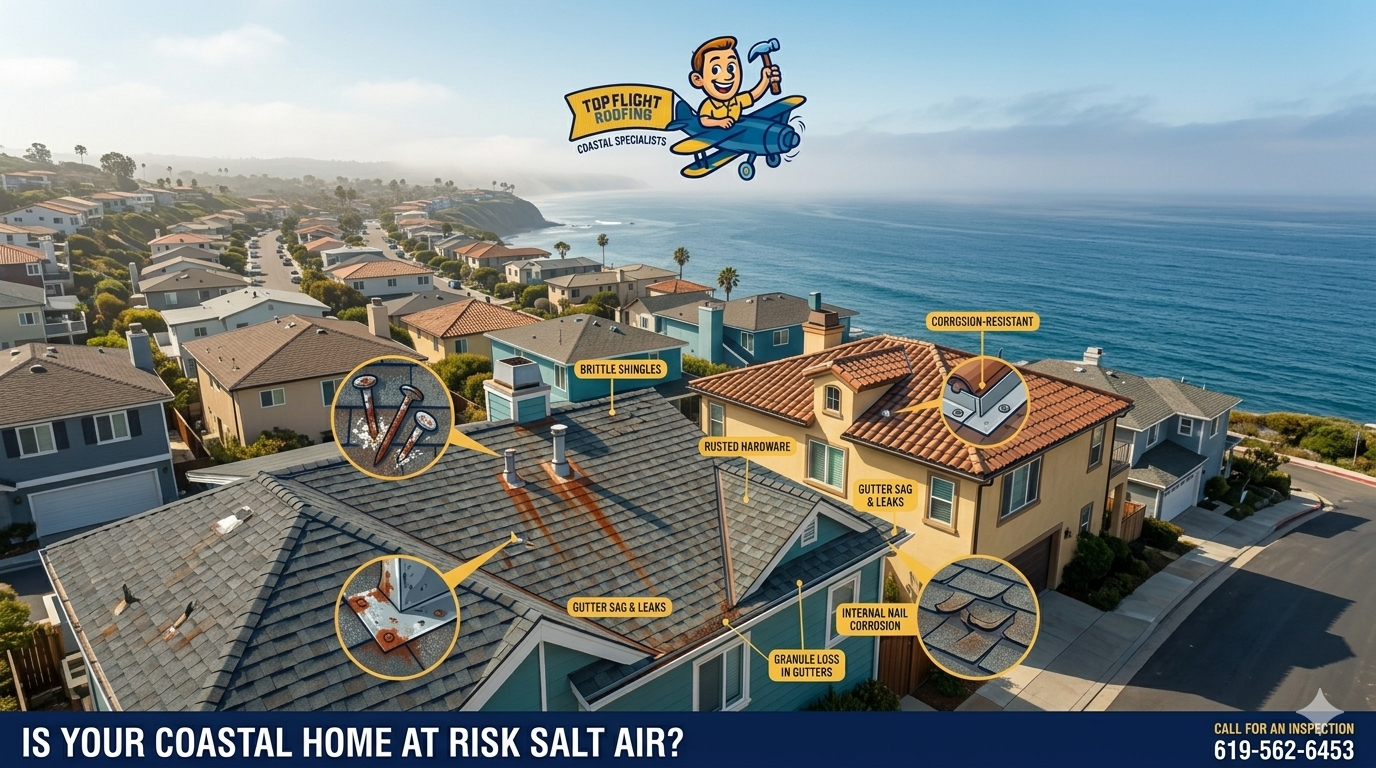
Salt Corrosion (Coastal Properties)
For homes within a mile of the coast, the inspector should check fasteners, flashing, and metal components for salt corrosion. Even when the roof surface looks fine, corrosion at the fastener level can cause hidden damage.
Heat Damage Indicators (Inland Properties)
For inland homes facing East County heat (El Cajon, Santee, Lakeside, Escondido), the inspector should look for signs of accelerated thermal aging: brittle shingles, dried-out sealant strips, granule loss patterns consistent with UV damage.
The Written Report
A proper inspection produces a written report that includes:
- Photos of every area checked, including problem areas
- Clear descriptions of any findings
- A prioritized list of recommended repairs (urgent, important, optional)
- Estimated remaining roof life
- Recommended next steps
- Cost estimates for any recommended work
If you don't get a written report, you didn't get a real inspection.
When to Schedule an Inspection
Most San Diego homes benefit from annual inspections. Additional inspections are worth considering:
- Before and after Santa Ana wind season (fall)
- Before listing your home for sale
- When buying a home (in addition to general home inspection)
- After any major weather event
- When you notice any signs of leaks or damage
- When your roof is approaching 15+ years old
What to Avoid
Some red flags when scheduling an inspection:
- Free inspections with high-pressure sales tactics
- Inspectors who don't physically get on the roof
- Verbal-only reports with no written documentation
- Claims of immediate emergency without specific evidence
- Inspectors not licensed and insured
- Door-to-door solicitations after storm events
Frequently Asked Questions
How long does a roof inspection take?
A thorough inspection takes 45 minutes to 2 hours depending on roof size and complexity. Anything significantly shorter probably isn't covering all the components properly.
How much does a roof inspection cost in San Diego?
Many roofing contractors offer free inspections, especially when there's likely to be repair or replacement work involved. Standalone fee-based inspections (often used for real estate transactions) typically run $200-500 depending on the report detail required.
What if the inspection finds problems?
The inspector should provide clear recommendations and cost estimates. You're never obligated to use the inspecting company for repair work, and getting a second opinion on significant findings is always reasonable.
Can I do my own roof inspection?
You can do a basic ground-level assessment for obvious issues, but a thorough inspection requires climbing the roof safely, accessing the attic, and knowing what to look for. Professional inspections are worth the cost for most homeowners.
How often do San Diego roofs actually need inspection?
Annual inspections are recommended. For roofs over 15 years old or in extreme exposure environments (coastal, inland heat, fire zones), twice-annual inspections are smart.
The Bottom Line
A proper roof inspection covers exterior condition, on-roof details, attic inspection, and San Diego-specific factors. It produces a written report with photos and clear recommendations. Annual inspections catch problems early and protect your home from expensive secondary damage. They're one of the highest-value preventive maintenance investments you can make as a San Diego homeowner.
Frequently Asked Questions: Coastal Roof Problems
Does living near the ocean shorten my roof's lifespan?
Yes. Salt in the marine air corrodes metal roofing components and dries out shingles faster than inland conditions. A coastal roof can show its age several years sooner than the same roof built a few miles inland.
What roofing material holds up best for coastal San Diego homes?
Clay and concrete tile resist salt well and fit the local look. If you prefer metal, aluminum and coated steels handle salt better than standard galvanized metal. Whatever the surface, use stainless steel or other corrosion-resistant fasteners and flashing.
How often should coastal homeowners get a roof inspection?
At least once a year. Salt damage builds quietly, so an annual check catches corroded fasteners, failing flashing, and worn shingles before they turn into leaks.
What are the signs of salt air damage on a roof?
Rust streaks below vents and flashing, curled or cracked shingles, granules collecting in the gutters, and gutters that sag or rust. Interior ceiling stains near exterior walls are another red flag.
Can you prevent salt air damage to a roof?
You can slow it. Rinse the roof and gutters with fresh water during dry stretches, keep gutters clear, and fix small issues quickly. Choosing corrosion-resistant materials at replacement time makes the biggest long-term difference.
More Articles

Roof Repair vs Replacement: Which Saves You More Money?
The Impact of Salt Air on Coastal Roofs in San Diego

Emergency Roof Repair in San Diego: What to Do After a Storm

Phone Number:
619-562-6453Address: 9510 Cuyamaca St STE 101, Santee CA 92071