
Top Signs of Roof Damage After Santa Ana Winds

Santa Ana wind events are part of life in San Diego County. Every fall through spring, hot dry winds from the desert sweep through the region with sustained speeds of 30-60 mph and gusts that can exceed 80 mph in canyons and hillsides. These winds do real damage to roofs, and much of that damage isn't visible from the ground.
If you've ridden out a recent Santa Ana event, here's what to look for and when to call a professional. Catching wind damage early prevents leaks, secondary damage, and expensive repairs down the line.
Why Santa Ana Winds Are Hard on Roofs
Several factors make Santa Ana winds particularly damaging:
- Sustained high speeds stress shingles and tiles continuously, not just in gusts
- Wind direction often hits roof slopes that don't typically face strong winds
- Hot dry air dries out shingle sealant strips, making them more vulnerable to lifting
- Long duration (events often last 12-48 hours) compounds damage
- Debris carried by the wind can strike and damage roofing materials
Visible Signs to Look for From the Ground
You don't need to climb on the roof to spot many wind damage indicators. Walk around your home and look for:
Missing or Visibly Lifted Shingles
Missing shingles are the most obvious sign. You'll see gaps where shingles used to be, usually concentrated on one side of the roof or along a ridge. Lifted shingles that didn't come off entirely look like a wave pattern on the roof surface.
Shingle Pieces or Granules in the Yard
After a wind event, walk your perimeter looking for shingle pieces, ridge cap fragments, or piles of granules below downspouts. Large amounts of granule debris indicate significant material loss from the roof surface.
Damaged or Missing Ridge Caps
The ridge of your roof (the peak where two slopes meet) takes the worst wind exposure. Ridge cap shingles often lift or blow off entirely before field shingles. Look up at the ridge line for missing or damaged caps.
Bent or Damaged Flashing
Metal flashing around chimneys, skylights, and vent pipes can bend or detach in high winds. Look for any obviously bent or missing flashing pieces.
Tree or Branch Damage
Did any branches fall on the roof during the event? Even small branches can damage shingles or puncture flashing. Larger limbs can cause significant structural damage.
Less Obvious Signs of Wind Damage
Some wind damage doesn't show up immediately. These signs often appear days or weeks after a Santa Ana event:
New Interior Stains or Drips
Check ceilings on the top floor for new water stains, especially after the first rain following a wind event. Wind-damaged roofing may not leak immediately but will start letting water in when rain finally arrives.
Attic Inspection Reveals Issues
Go into your attic with a flashlight after a major wind event. Look for any new daylight visible through the roof deck, water stains on rafters or insulation, or damp spots on the underside of the deck.
Loose or Missing Gutters
Wind can pull gutters away from the fascia. Damaged gutters lead to water backing up onto the roof edge, which can cause leaks later.
Damaged Vent Caps or Pipe Boots
Roof vents and pipe boots often get damaged in high winds. Cracked or missing vent caps allow water to enter the attic through openings designed for airflow.
What Hillside and Canyon Homes Should Watch For
Homes in hillside neighborhoods like Mount Helix, Rancho Penasquitos, Scripps Ranch, and canyon-edge properties throughout San Diego County face amplified wind exposure during Santa Ana events. These homes should expect:
- More frequent ridge cap damage
- Greater stress on flashing around skylights and chimneys
- Higher likelihood of shingle lifting on windward slopes
- More tree and brush debris damage
If you live in one of these higher-exposure areas, post-event roof inspections are particularly valuable.
What to Do If You Spot Damage
If you see any of these warning signs, take the following steps:
Document Everything
Take photos of any visible damage from the ground. If you can safely access the property from multiple angles, get photos from different vantage points. Date the photos. If you eventually need to file an insurance claim, this documentation matters.
Don't Climb the Roof
Even if you can normally walk your roof safely, post-storm roofs may have hidden damage that makes them dangerous. Loose shingles, damaged structure, or unstable areas can cause falls. Leave the roof inspection to a professional.
Get a Professional Inspection
A roofing contractor can safely inspect the entire roof, identify damage you couldn't see from the ground, and document everything for insurance purposes. Most reputable contractors will provide a written report with photos.
File Insurance Claims Promptly
If damage looks significant, contact your insurance company. Most homeowner policies cover wind damage but require prompt reporting. Waiting too long can complicate the claim process.
How to Prepare for the Next Santa Ana Event
You can't prevent Santa Ana winds, but you can reduce damage:
- Trim trees and remove dead branches before fall arrives
- Have your roof inspected annually before Santa Ana season
- Replace any damaged or missing shingles before wind events hit
- Make sure ridge caps are secure and in good condition
- Consider upgrading to wind-rated materials when you replace your roof
Frequently Asked Questions
How fast do winds need to be to damage a roof?
Standard residential roofing is rated for sustained winds of 60-90 mph. Damage can occur at lower speeds, especially on older roofs with degraded shingle sealant or improperly nailed materials. Many Santa Ana events exceed those thresholds in canyon and hillside locations.
Will insurance cover Santa Ana wind damage?
Most homeowner policies cover wind damage, but coverage details vary. Document everything, file claims promptly, and work with a roofing contractor who can provide insurance-ready documentation.
Should I inspect my roof after every Santa Ana event?
After major events with sustained winds over 50 mph or significant debris, yes. For smaller events that don't cause obvious issues, an annual professional inspection covers the cumulative wear.
Can I just replace damaged shingles myself?
For one or two missing shingles, it's possible if you have matching materials and roofing experience. For anything beyond that, professional repair is safer and produces a watertight result. DIY repairs often miss underlying issues.
How long do I have to file a wind damage claim?
Most insurance policies require claims to be filed within a year of the event, but filing as soon as possible is always better. Documentation degrades over time and damage can worsen if not addressed.
The Bottom Line
Santa Ana winds cause real damage to San Diego County roofs every year, but much of it isn't obvious from the ground. After significant events, look for the visible signs, check your attic, and consider a professional inspection. Catching damage early prevents leaks during the next rain and saves money on repairs that would otherwise spread into bigger problems.
Frequently Asked Questions: Coastal Roof Problems
Does living near the ocean shorten my roof's lifespan?
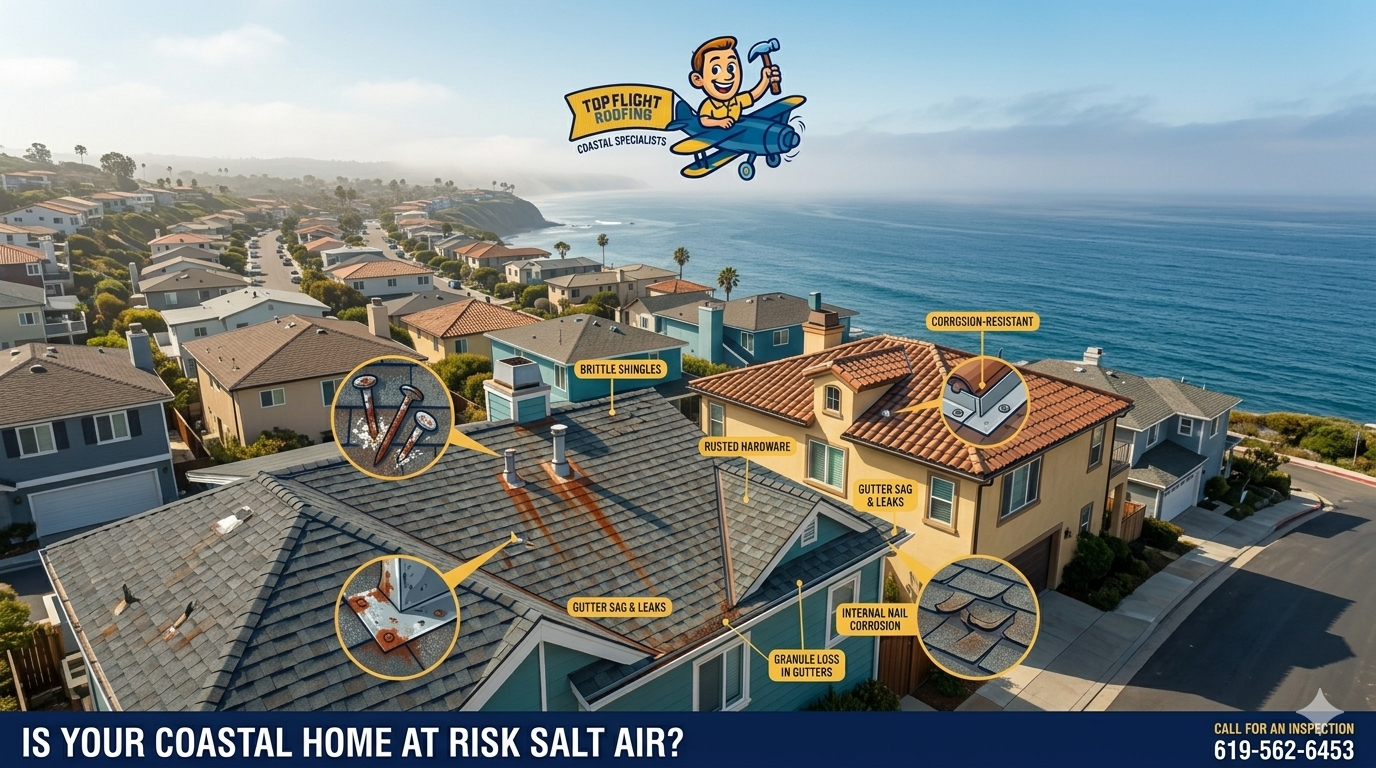
Yes. Salt in the marine air corrodes metal roofing components and dries out shingles faster than inland conditions. A coastal roof can show its age several years sooner than the same roof built a few miles inland.
What roofing material holds up best for coastal San Diego homes?
Clay and concrete tile resist salt well and fit the local look. If you prefer metal, aluminum and coated steels handle salt better than standard galvanized metal. Whatever the surface, use stainless steel or other corrosion-resistant fasteners and flashing.
How often should coastal homeowners get a roof inspection?
At least once a year. Salt damage builds quietly, so an annual check catches corroded fasteners, failing flashing, and worn shingles before they turn into leaks.
What are the signs of salt air damage on a roof?
Rust streaks below vents and flashing, curled or cracked shingles, granules collecting in the gutters, and gutters that sag or rust. Interior ceiling stains near exterior walls are another red flag.
Can you prevent salt air damage to a roof?
You can slow it. Rinse the roof and gutters with fresh water during dry stretches, keep gutters clear, and fix small issues quickly. Choosing corrosion-resistant materials at replacement time makes the biggest long-term difference.
More Articles

Roof Repair vs Replacement: Which Saves You More Money?
The Impact of Salt Air on Coastal Roofs in San Diego

Emergency Roof Repair in San Diego: What to Do After a Storm

Phone Number:
619-562-6453Address: 9510 Cuyamaca St STE 101, Santee CA 92071