
How to Choose the Right Roofing Contractor in San Diego

Choosing the right roofing contractor is one of the most consequential home decisions a San Diego homeowner makes. A good contractor delivers a roof that lasts decades. A bad one delivers leaks, callbacks, and sometimes outright fraud. The roofing industry has more than its share of bad actors, particularly after major weather events when storm-chasers descend on affected neighborhoods.
Here's how to find a roofing contractor you can actually trust in San Diego County, plus the warning signs that tell you to walk away.
What Matters Most in a Roofing Contractor
Before getting into red flags, let's cover what a quality roofing contractor actually looks like. Four main qualifications matter:
California State Contractor License (CSLB)
Any contractor doing roofing work in California must hold a C-39 roofing license from the Contractors State License Board (CSLB). You can verify any contractor's license at cslb.ca.gov. The license number should appear in their marketing materials, on their truck, and in any contract.
Working with an unlicensed contractor isn't just risky, it's actually illegal in California for any job over $500. Unlicensed contractors can't pull permits, often skip code requirements, and leave you with no recourse if work fails.
Insurance and Bonding
A legitimate roofing contractor carries general liability insurance (typically $1 million minimum) and workers' compensation insurance for employees. Ask for current certificates of insurance before any work begins. Insurance protects you if someone gets hurt on your property or if their work damages your home.
Local Reputation and Track Record
A contractor who's been operating in San Diego County for years has a reputation you can verify. Look for:
- Years in business locally (not just years in the trade)
- Online reviews on Google, Yelp, Angi, and the Better Business Bureau
- References from recent local customers
- Examples of completed work in your area
Manufacturer Certifications
Roofing manufacturers (GAF, Owens Corning, CertainTeed, and others) certify contractors who meet specific training and quality standards. Certified contractors can offer enhanced warranties that non-certified installers can't. Certifications don't guarantee quality but they're a positive signal.
Red Flags That Tell You to Walk Away
The roofing industry has some specific scam patterns. Watch for these:
Door-to-Door Solicitation After Storms
After major wind, hail, or storm events, "storm chasers" descend on affected neighborhoods offering quick assessments and immediate repairs. Many of these operators aren't licensed locally, may not even be from California, and disappear once work is complete (or paid for). If someone knocks on your door after a storm offering roofing help, be very skeptical.
High-Pressure Sales Tactics
Phrases like "we can only offer this price today," "we have crews in the area right now," or "you need to decide immediately" are designed to prevent you from comparing options or doing due diligence. Legitimate contractors will give you time to think and compare quotes.
Demands for Large Upfront Payments
California law limits down payments for home improvement work to 10% of the contract or $1,000, whichever is less. Any contractor demanding 50% upfront, or full payment before work starts, is violating the law.
No Written Contract
Every roofing project should have a detailed written contract specifying scope of work, materials, timeline, total cost, payment schedule, warranty terms, and license number. Anyone wanting to start work on a handshake or vague verbal agreement is a red flag.
Unmarked Vehicles and No Permanent Address
Legitimate contractors have marked vehicles, a permanent local business address, and verifiable contact information. Operators using unmarked trucks, PO boxes, or only cell phone contact may not be around when you need warranty work.
Pressure to Skip the Permit
"You don't need a permit for this" is a common line that saves the contractor time and money but leaves you exposed. Most full roof replacements and significant repairs in San Diego County require permits. Skipping permits causes problems when you eventually sell the home.
Cash-Only Requirements
Insistence on cash payment with no checks or credit cards accepted is a warning sign. Legitimate businesses accept multiple payment methods and provide receipts.
How to Compare Quotes
Get quotes from at least three different roofing contractors for any major project. When comparing them, look beyond just the total price:
Scope of Work Detail
Good quotes specify exactly what's being done: tear-off scope, deck inspection, underlayment type, shingle or tile brand and model, flashing details, ventilation work, cleanup, and disposal. Vague quotes that just say "replace roof" make comparison impossible and leave room for surprises.
Materials Specified
Quotes should name specific manufacturers and product lines, not just "asphalt shingles" or "tile roof." This lets you compare apples to apples and verify quality.
Warranty Terms
Compare both material warranties (from the manufacturer) and workmanship warranties (from the contractor). A 25-year material warranty paired with a 1-year workmanship warranty is weaker than a 25-year material warranty paired with a 10-year workmanship warranty.
Timeline
When can they start? How long will the project take? What's their backup plan if weather delays the work?
Total Cost vs Cheapest Cost
The cheapest quote isn't always the best deal. Significantly low quotes often mean cheaper materials, less experienced crews, or skipped steps that show up as problems years later. The middle of the range is usually where the legitimate options sit.
Questions to Ask Before Hiring
Ask every contractor the same questions and compare the answers:
- How long have you been doing roofing in San Diego County specifically?
- What's your CSLB license number?
- Are your installers employees or subcontractors?
- Will you pull all required permits?
- What manufacturer certifications do you hold?
- Can you provide references from recent local projects?
- What's your warranty on workmanship?
- What happens if you find unexpected damage during the project?
- Who is my main point of contact during the project?
- What's your process for handling weather delays?
San Diego-Specific Considerations
A few things matter more in San Diego than in other markets:
Fire Zone Experience
If you live in a high fire severity zone, ask specifically about their experience with Class A fire-rated systems and ember-resistant detailing. Not all contractors are equally experienced with fire-zone requirements.
Coastal Experience
If you live in a coastal area, ask about marine-grade materials, stainless steel fasteners, and copper flashing. Coastal homes need different approaches than inland properties.
Tile Expertise
Many San Diego homes have tile roofs, which require different skills than asphalt shingles. Ask about specific tile experience if your home has tile.
HOA Coordination
If your home is in a master-planned community with HOA requirements, ask whether they handle HOA submissions and approvals as part of the project.
Frequently Asked Questions
How can I verify a contractor's CSLB license?
Go to cslb.ca.gov and use the license check tool. Enter the contractor's license number or business name. The site shows license status, classifications, and any complaints or disciplinary actions on file.
Should I always get three quotes?
For projects over a few thousand dollars, yes. For smaller repairs, two quotes is usually enough. The point is to have something to compare and to avoid making a decision under pressure from a single salesperson.
How much should I pay upfront?
California law limits down payments to 10% of contract value or $1,000, whichever is less. Most legitimate roofers structure payments with a small deposit, a progress payment at material delivery or work start, and final payment upon completion.
What if the contractor wants to handle my insurance claim?
Some contractors offer to negotiate directly with insurance, which can be helpful but also creates conflicts of interest. Be cautious of contractors who promise specific outcomes or seem too eager to bypass standard insurance processes.
How do I know a contractor's reviews are real?
Look at review patterns: a mix of dates, varied writing styles, specific project details, and responses from the business. Be skeptical of clusters of similar-sounding 5-star reviews posted within days of each other.
The Bottom Line
The right roofing contractor protects your San Diego home for decades. The wrong one creates problems you'll pay to fix for years. Verify licensing, check insurance, compare detailed written quotes, watch for red flags, and trust your gut. If something feels off about a contractor's approach, walk away. The roofing industry has plenty of legitimate professionals, and finding one is worth the extra effort.
Frequently Asked Questions: Coastal Roof Problems
Does living near the ocean shorten my roof's lifespan?
Yes. Salt in the marine air corrodes metal roofing components and dries out shingles faster than inland conditions. A coastal roof can show its age several years sooner than the same roof built a few miles inland.
What roofing material holds up best for coastal San Diego homes?
Clay and concrete tile resist salt well and fit the local look. If you prefer metal, aluminum and coated steels handle salt better than standard galvanized metal. Whatever the surface, use stainless steel or other corrosion-resistant fasteners and flashing.
How often should coastal homeowners get a roof inspection?
At least once a year. Salt damage builds quietly, so an annual check catches corroded fasteners, failing flashing, and worn shingles before they turn into leaks.
What are the signs of salt air damage on a roof?
Rust streaks below vents and flashing, curled or cracked shingles, granules collecting in the gutters, and gutters that sag or rust. Interior ceiling stains near exterior walls are another red flag.
Can you prevent salt air damage to a roof?
You can slow it. Rinse the roof and gutters with fresh water during dry stretches, keep gutters clear, and fix small issues quickly. Choosing corrosion-resistant materials at replacement time makes the biggest long-term difference.
More Articles
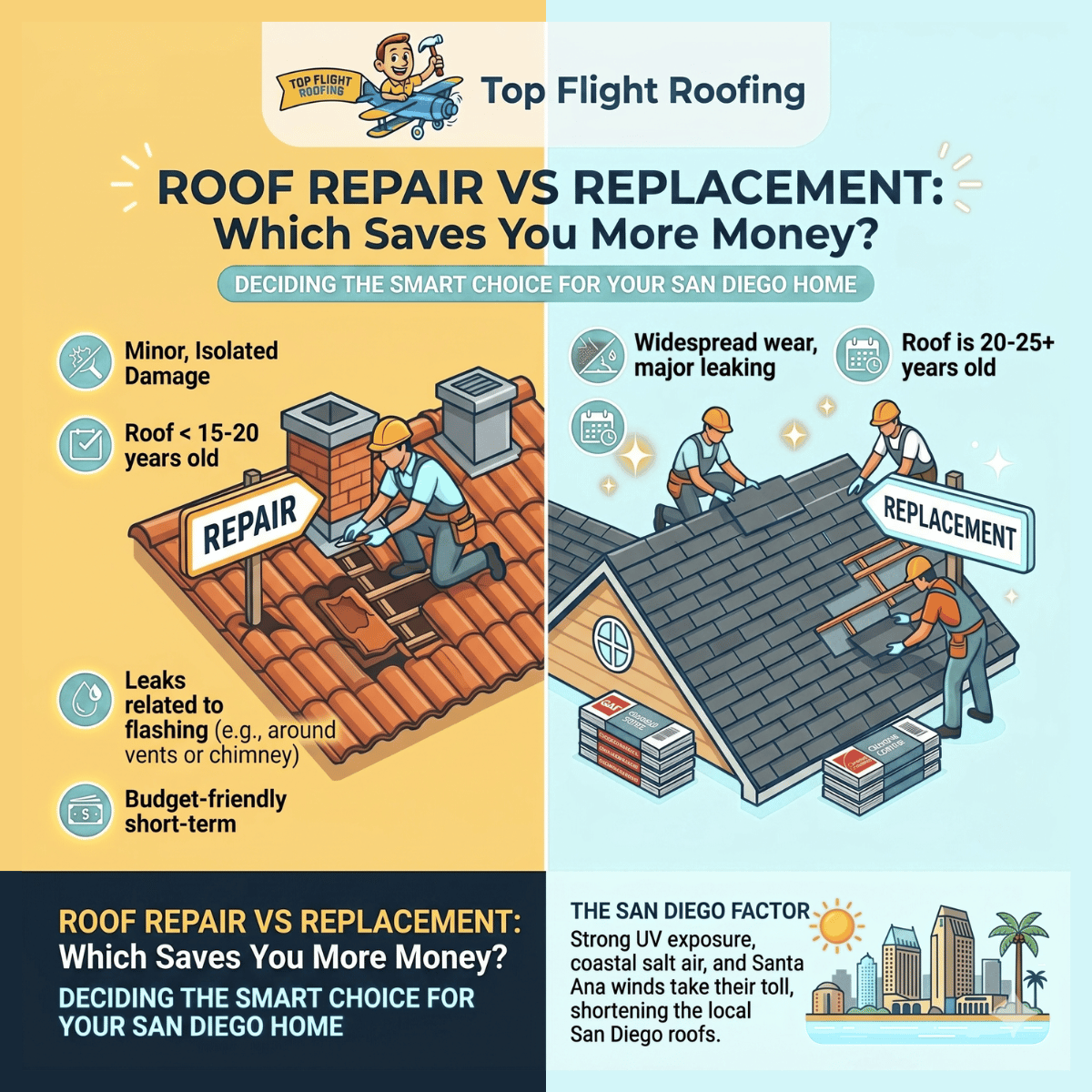
Roof Repair vs Replacement: Which Saves You More Money?
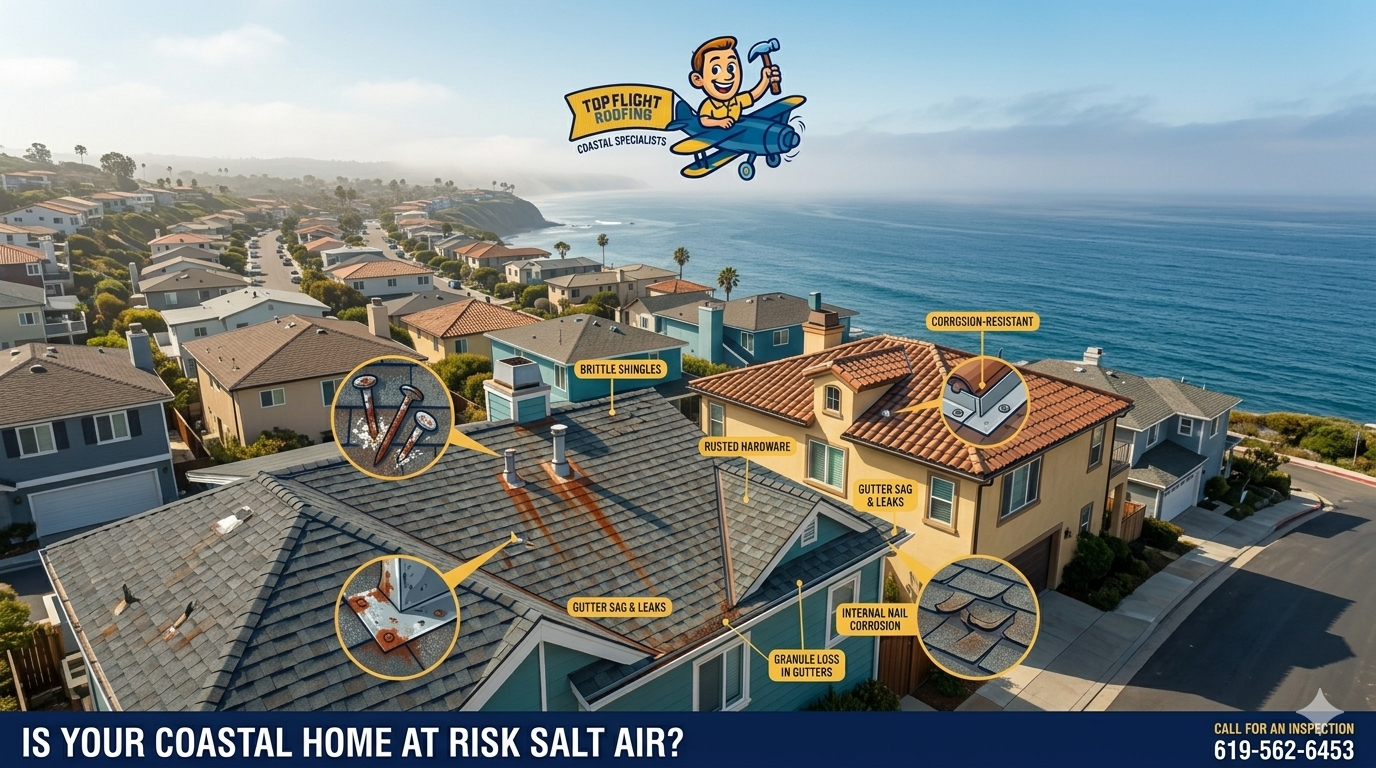
The Impact of Salt Air on Coastal Roofs in San Diego

Emergency Roof Repair in San Diego: What to Do After a Storm

Phone Number:
619-562-6453Address: 9510 Cuyamaca St STE 101, Santee CA 92071