
How Long Does a Roof Last in Southern California?

Roof lifespan is one of the most common questions Southern California homeowners ask, and the honest answer is: it depends. A lot. The nominal lifespan that comes with manufacturer warranties (20 years, 30 years, 50 years for tile) doesn't always match reality in Southern California's specific climate conditions. Salt air, intense UV exposure, sustained heat, and Santa Ana winds all play a role in how long your roof actually lasts.
Here's a realistic breakdown of what to expect from different roofing materials in Southern California, and the factors that can shorten or extend their useful life.
Asphalt Shingle Roof Lifespan
Asphalt shingles are the most common roofing material in Southern California homes. The two main types behave differently:
3-Tab Asphalt Shingles
Older and less common in new construction, 3-tab shingles typically carry 20-25 year warranties. In Southern California's UV-intense climate, real-world lifespan is closer to 15-20 years, especially in inland heat zones like El Cajon, Escondido, or Lakeside. Coastal salt exposure shortens this further.
Architectural (Dimensional) Shingles
Architectural shingles are now the standard for most new construction and replacement roofs. They carry warranties of 30-50 years, with realistic Southern California performance of 20-30 years. Premium fiberglass-reinforced architectural shingles installed with proper ventilation and underlayment can hit the higher end of that range.
Tile Roof Lifespan
Concrete and clay tile roofs are extremely common in Southern California, especially in newer master-planned communities and Spanish or Mediterranean-style homes.
Concrete Tile
The tile itself can last 50+ years. The catch is the underlayment beneath the tile, which typically needs replacement at 20-25 years. This is where the "tile lift-and-relay" service comes in: the original tiles are saved and reinstalled over new underlayment, dramatically reducing the cost compared to full replacement.
Clay Tile
Clay tile is even more durable than concrete and can last 75-100 years. Again, the underlayment needs replacement around year 25. Clay tile holds up extremely well in coastal Southern California environments where salt air would degrade other materials.
Metal Roof Lifespan
Standing seam metal roofs and other quality metal systems can last 40-70 years in Southern California, with proper installation and material selection. Coastal locations require coated metal or naturally corrosion-resistant materials like copper or zinc, which extend lifespan dramatically.
Flat Roof Systems
Flat roofs on commercial buildings and some residential properties (especially modern designs and condo buildings) use different systems with different lifespans:
- Built-up roofing (BUR): 15-30 years
- Modified bitumen: 10-20 years
- TPO single-ply: 15-25 years
- EPDM rubber: 20-30 years
Factors That Shorten Roof Lifespan in Southern California
Several Southern California-specific factors affect how long any roof actually lasts:
Coastal Salt Air
If you live within a mile of the coast (think Pacific Beach, La Jolla, Encinitas, Carlsbad, Oceanside), salt air corrodes metal components and breaks down asphalt binders faster than inland areas. Without marine-grade materials, expect 20-30% shorter lifespan than inland installations.
Inland Heat
Sustained heat in inland Southern California (parts of San Diego County like El Cajon, Escondido, Ramona, Alpine) accelerates the breakdown of asphalt shingles. Attic temperatures over 140�F dry out the petroleum-based components of shingles, making them brittle and prone to cracking.
UV Exposure
Southern California gets some of the most intense year-round sun exposure in the country. UV breaks down roofing materials regardless of temperature, with south-facing slopes typically wearing out before north-facing slopes on the same home.
Santa Ana Winds
Fall and winter Santa Ana wind events can damage roofs across all of Southern California, lifting shingles, cracking ridge caps, and stressing flashing. Cumulative wind damage over years shortens overall roof lifespan.
Poor Ventilation
Many older Southern California homes lack proper attic ventilation, which causes heat buildup that ages roofing materials from below. Adding proper ventilation can extend roof life by years.
Factors That Extend Roof Lifespan
The good news: several factors can push your roof past its nominal lifespan if you're proactive:
- Annual professional roof inspections that catch small issues early
- Proper attic ventilation to reduce heat buildup
- Marine-grade materials in coastal areas
- Class A fire-rated systems with quality underlayments
- Prompt repairs when issues appear, before they spread
- Tree maintenance to reduce debris and impact damage
- Gutter maintenance to prevent water backup at the roof edge
How to Tell Your Roof's Age and Condition
If you don't know how old your roof is (a common situation when you buy a home), here are some indicators:
- Check home records or ask the previous owner
- Permit records with your city may show when the roof was last replaced
- Look at the shingles or tiles from the ground for visible aging signs
- Check the attic for visible underlayment condition and any past leak evidence
- Have a professional inspection done if any of the above is unclear
Frequently Asked Questions
Does my Southern California roof last as long as the warranty says?
Usually no. Manufacturer warranties are based on ideal conditions, while Southern California's UV, heat, and salt exposure tend to age materials faster than the warranty period. Plan for 70-80% of warranty length as realistic lifespan in most areas.
Can I extend my current roof's life?
Yes, often by years. Annual inspections, prompt repairs, improved attic ventilation, and proper gutter maintenance all help. A roofing contractor can often identify simple changes that extend roof life significantly.
Should I replace my roof before it fails?
Yes, especially if it's near end-of-life and you're staying in the home long-term. Replacing before active leaks develop prevents secondary damage to the deck, attic insulation, and interior of the home.
Does roof color affect lifespan in Southern California?
Yes, somewhat. Lighter colors reflect more UV and reduce heat absorption, which can extend lifespan slightly. Cool roof shingles specifically engineered for high reflectivity can reduce attic temperatures by 15-30�F and noticeably extend roof life.
How often should I have my roof inspected?
Annual inspections are recommended for all Southern California roofs. For roofs over 15 years old or in coastal/inland-heat extremes, twice-annual inspections (spring and fall) are smart.
The Bottom Line
Most Southern California asphalt shingle roofs last 20-25 years. Tile roofs last 50+ years on the tile itself but need underlayment work at 25 years. Coastal environments shorten typical lifespan, inland heat shortens it differently, and proactive maintenance extends it. Knowing what to expect helps you plan ahead instead of reacting to problems when they appear.
Frequently Asked Questions: Coastal Roof Problems
Does living near the ocean shorten my roof's lifespan?
Yes. Salt in the marine air corrodes metal roofing components and dries out shingles faster than inland conditions. A coastal roof can show its age several years sooner than the same roof built a few miles inland.
What roofing material holds up best for coastal San Diego homes?
Clay and concrete tile resist salt well and fit the local look. If you prefer metal, aluminum and coated steels handle salt better than standard galvanized metal. Whatever the surface, use stainless steel or other corrosion-resistant fasteners and flashing.
How often should coastal homeowners get a roof inspection?
At least once a year. Salt damage builds quietly, so an annual check catches corroded fasteners, failing flashing, and worn shingles before they turn into leaks.
What are the signs of salt air damage on a roof?
Rust streaks below vents and flashing, curled or cracked shingles, granules collecting in the gutters, and gutters that sag or rust. Interior ceiling stains near exterior walls are another red flag.
Can you prevent salt air damage to a roof?
You can slow it. Rinse the roof and gutters with fresh water during dry stretches, keep gutters clear, and fix small issues quickly. Choosing corrosion-resistant materials at replacement time makes the biggest long-term difference.
More Articles
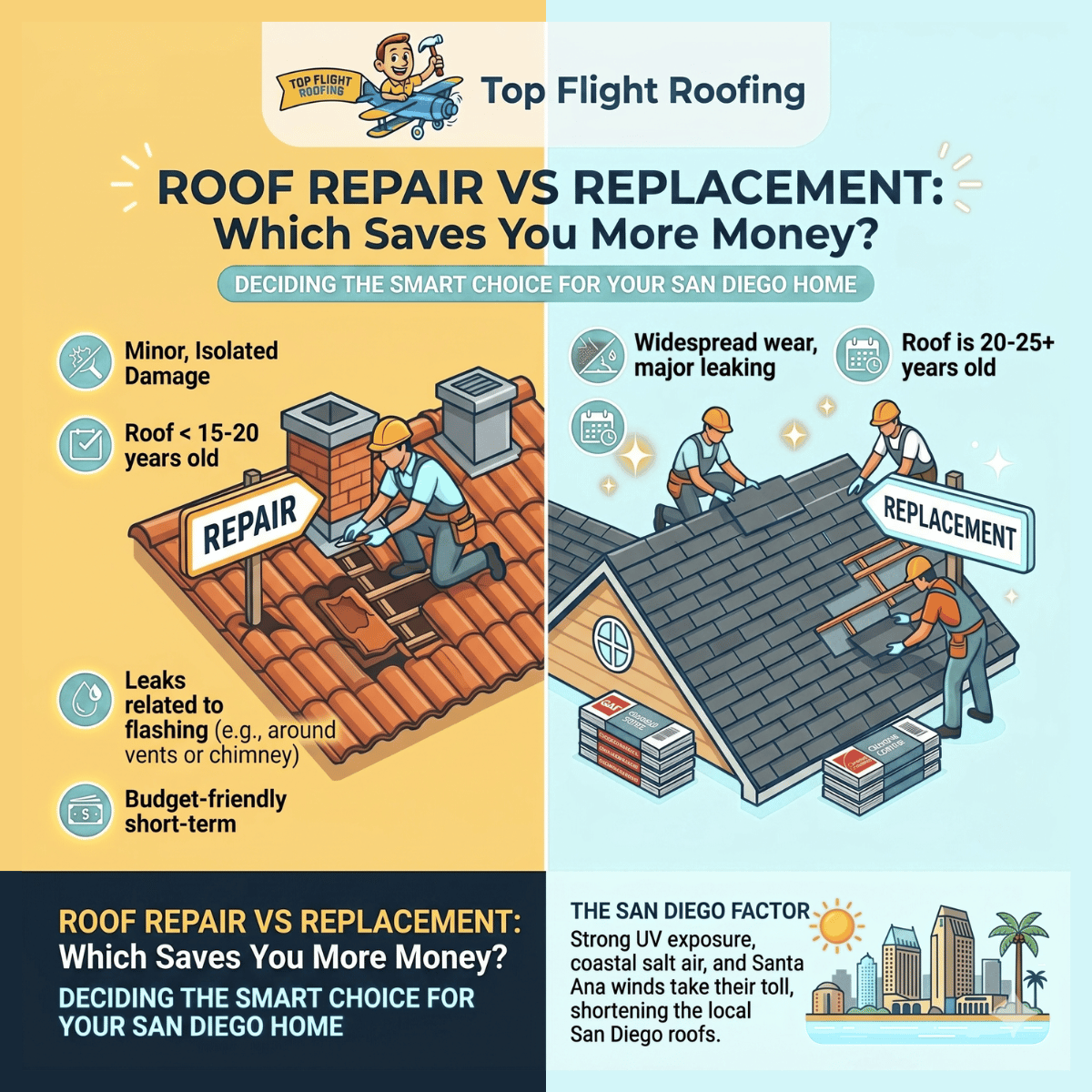
Roof Repair vs Replacement: Which Saves You More Money?
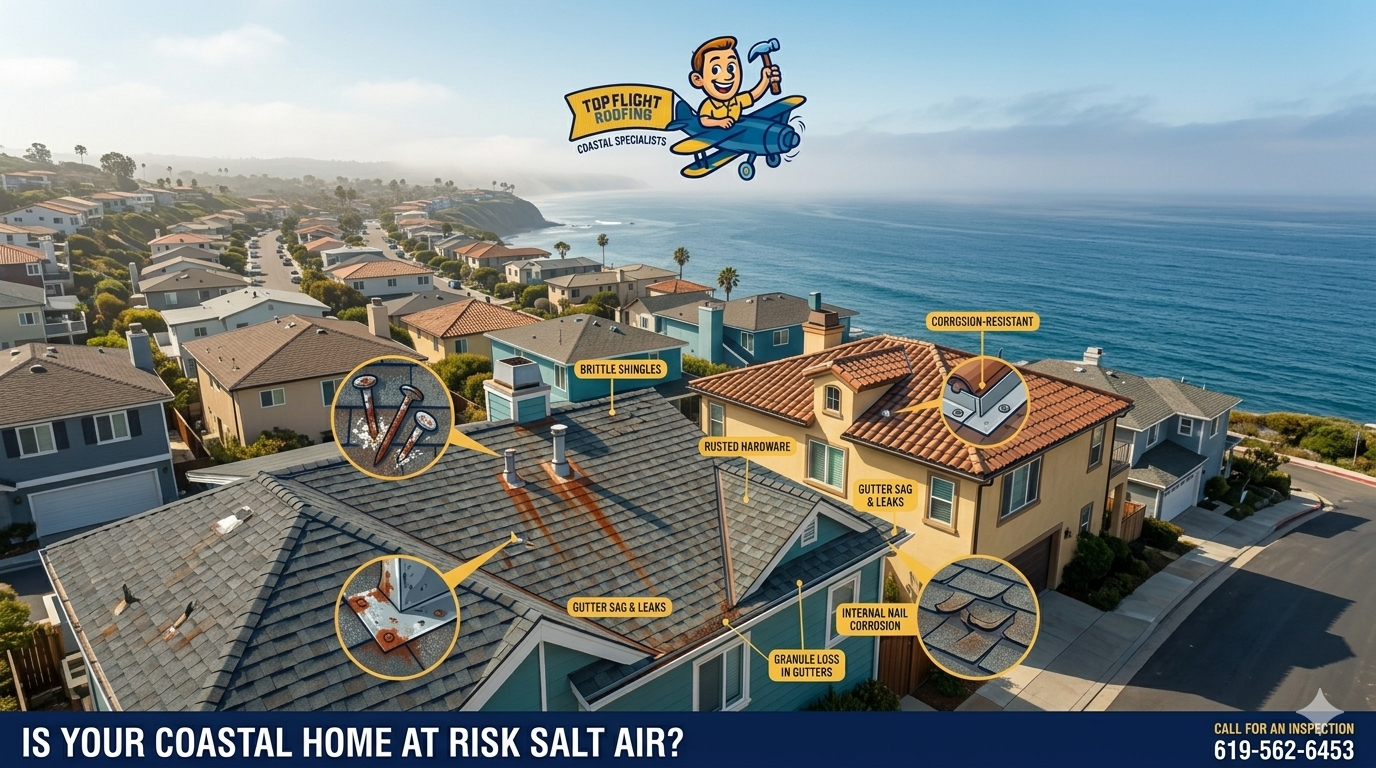
The Impact of Salt Air on Coastal Roofs in San Diego

Emergency Roof Repair in San Diego: What to Do After a Storm

Phone Number:
619-562-6453Address: 9510 Cuyamaca St STE 101, Santee CA 92071